Brooklyn is not one place. It is seventy-plus neighborhoods, each with its own character, its own history, its own languages, and its own understanding of what family care looks like. A family arranging home care in Borough Park is navigating a different world than a family in Bay Ridge or Sheepshead Bay or Crown Heights — different hospitals, different insurance landscapes, different cultural expectations about who provides care and how. This article is written for all of them.
What Brooklyn families need when they begin looking for senior home care is not a list of services. It is an agency that understands the borough at street level — one that knows why a Russian-speaking client in Brighton Beach needs a Russian-speaking aide, why a kosher household in Flatbush requires specific awareness of dietary and religious practice, why a family in Canarsie with Caribbean roots may have a particular set of expectations about the aide’s role in the household. That kind of knowledge does not come from a franchise template. It comes from thirty years of placements across every corner of Brooklyn.
What Brooklyn Families Are Actually Looking For
Most families begin looking for home care in Brooklyn at a moment of pressure. A hospital discharge has been arranged faster than expected. A parent has had a fall. A cognitive change that the family has been quietly managing for months has crossed a threshold that can no longer be managed quietly. The search for a home care agency in Brooklyn — whether through a discharge coordinator’s referral, a neighbor’s recommendation, or a late-night search — is rarely a leisurely one.
What matters most in that search is not which agency has the most polished website or the longest list of services. It is whether the agency can place the right aide — someone who speaks the client’s language, understands their cultural context, and can build the kind of relationship that makes home care actually work. Brooklyn’s extraordinary diversity means that question is not rhetorical. For a significant proportion of the borough’s senior population, care delivered without language or cultural alignment is care that breaks down. The family knows it within a week and the client knows it sooner.
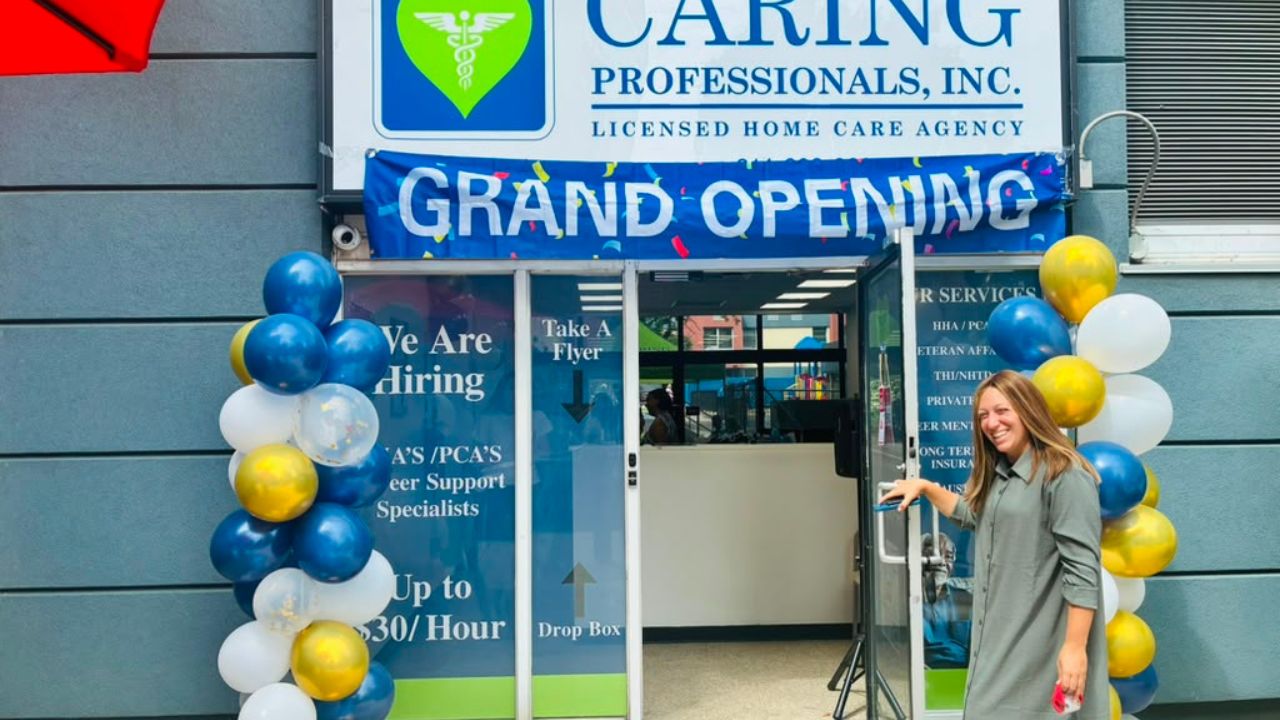
Caring Professionals has maintained an office in Brooklyn on Avenue Z since the agency’s founding in 1994. The home care needs of Brooklyn’s communities are not an abstraction for us. They are the accumulated experience of more than three decades of placements across neighborhoods that have changed, grown, and diversified in ways that a distant headquarters cannot track.
Brooklyn’s Neighborhoods and the Home Care Needs They Carry
Brooklyn’s diversity is not evenly distributed. It is concentrated in specific communities, each with specific needs that a home care agency either understands or does not. The following is not an exhaustive geography of the borough — it is a recognition that the families we serve in different parts of Brooklyn are often navigating genuinely different care environments.
Brighton Beach and Sheepshead Bay
The Russian and Eastern European communities concentrated along Brighton Beach Avenue and throughout Sheepshead Bay represent one of the largest and most cohesive immigrant senior populations in New York City. For many of these clients, English is a second language acquired late in life or not at all, and the presence of a Russian-speaking home health aide is not a preference — it is a clinical necessity. Medication reminders, communication about changes in condition, and the basic daily relationship between aide and client all depend on a shared language. Beyond language, Russian-speaking families in this part of Brooklyn often have specific cultural expectations about family involvement in care decisions, attitudes toward medical authority, and household routines that an aide unfamiliar with the community will navigate poorly.
Caring Professionals employs Russian-speaking home health aides and personal care assistants who have worked in these communities for years. That continuity of cultural knowledge is part of what we offer families in southern Brooklyn.
Borough Park and Crown Heights
The Orthodox and Hasidic Jewish communities of Borough Park and Crown Heights present a distinct set of care requirements that go well beyond language. Shabbat and Yom Tov observance affects scheduling in ways that require genuine planning — aides must understand what is and is not appropriate during religious periods, and care continuity across Shabbat requires specific coordination. Kosher dietary requirements are not a preference to be accommodated where convenient; they are a non-negotiable aspect of the household. An aide who handles food without awareness of kosher practice introduces a real problem into a family’s daily life.
For Yiddish-speaking clients — a significant population among the older generation in these communities — Yiddish language capability in an aide is a meaningful differentiator. Caring Professionals has placed Yiddish-speaking aides with Borough Park and Crown Heights families for decades, and our coordinators understand the specific scheduling and observance requirements that make care in these communities work.
Flatbush, Crown Heights, and Canarsie
The Caribbean and West Indian communities across Flatbush, Eastern Crown Heights, and Canarsie have strong family caregiving traditions, and the introduction of a professional home health aide into a household that has been managing care within the family can require careful handling. The aide’s role needs to be clearly defined in a way that respects and works alongside existing family structures rather than displacing them. Haitian Creole and Spanish are the primary languages for significant portions of this population, and Caring Professionals maintains Haitian Creole and Spanish-speaking aides specifically for these communities.
Families in this part of Brooklyn also frequently navigate the Medicaid and MLTC system for the first time without the benefit of prior experience with the healthcare bureaucracy, and the LHCSA’s role in helping families understand what they are entitled to and how to access it is particularly important here.
Sunset Park
Sunset Park’s Chinese community — one of the largest outside of Manhattan’s Chinatown — includes a significant senior population with Mandarin and Cantonese as primary languages. The cultural norms around filial care in Chinese families can be complex in the home care context: there is often a strong expectation that family members will provide direct care, and the decision to bring in a professional aide may be freighted with cultural significance around filial duty. An agency that understands this dynamic can help families frame the aide’s role in a way that is consistent with their values rather than in tension with them.
Caring Professionals employs Mandarin and Cantonese-speaking aides and has worked with Sunset Park families long enough to understand the specific community resources and senior services available in that neighborhood.
Bay Ridge and Bensonhurst
Bay Ridge and Bensonhurst are home to substantial Arab-American and Italian-American communities alongside a growing diversity of newer arrivals. Multi-generational households are common, and the home care arrangement often involves coordinating with multiple family members across different schedules and, in some cases, different languages. Arabic-speaking aides — particularly those familiar with the norms of Arab-American family life around privacy, gender, and the role of the aide — are in consistent demand in this part of Brooklyn.
Bed-Stuy, Brownsville, and East New York
The predominantly Black communities of Bed-Stuy, Brownsville, and East New York have historically faced significant barriers to equitable healthcare access, and those barriers extend into the home care system. Families in these neighborhoods are more likely to encounter delays and gaps in CHHA coordination after a hospital discharge, more likely to face challenges navigating Medicaid and MLTC enrollment without assistance, and more likely to be caring for seniors with complex, undertreated chronic conditions. An agency with genuine presence in these communities — and coordinators who understand the specific systemic obstacles families face — provides a different quality of support than one simply filling geographic coverage on a service map.
Brooklyn Hospitals and What Happens After Discharge
For most Brooklyn families, the home care conversation begins at a hospital. Understanding which hospitals serve which neighborhoods, and what the discharge process looks like at each, is practical knowledge that makes the transition from hospital to home materially smoother.
Maimonides Medical Center in Borough Park is the primary hospital for much of southwestern Brooklyn — Borough Park, Bensonhurst, Sunset Park, and Bay Ridge among them. It has longstanding relationships with the Orthodox and Chinese communities it serves and a discharge process that is generally well-coordinated. Kings County Hospital in Crown Heights serves a broad swath of central and eastern Brooklyn and is one of the busiest public hospitals in New York City; discharge coordination there can be more variable, and families benefit from being proactive in confirming CHHA arrangements before the day of discharge.
NYU Langone Brooklyn — formerly Lutheran Medical Center — in Sunset Park serves the Bay Ridge and Sunset Park communities and has strong ties to the local Chinese community. Brookdale University Hospital in Brownsville serves Brownsville, East New York, and Canarsie, where the discharge-to-home coordination challenges identified above are most pronounced. Coney Island Hospital serves the southern Brooklyn communities including Brighton Beach, Sheepshead Bay, and Gravesend.
At every one of these hospitals, the window between a discharge decision and a patient leaving the building can be shorter than families expect. Having an LHCSA identified and a care coordinator contacted before the discharge date — not after — is the single most effective thing a Brooklyn family can do to ensure the first week at home goes smoothly. Our guide to hospital discharge and home care in New York covers the full process in detail.
What to Look For in a Brooklyn Home Care Agency
The criteria for evaluating a home care agency in Brooklyn are the same as anywhere in New York — LHCSA licensure, staff vetting, Medicaid and MLTC plan acceptance, after-hours support — but the weighting of those criteria shifts in a borough this diverse. Language and cultural matching, in particular, carry more practical weight in Brooklyn than in almost any other part of New York. An agency that cannot demonstrate genuine multilingual capability across the languages actually spoken in Brooklyn’s senior communities is an agency working with a significant limitation in this market.
The question of borough-level presence matters too. An agency with a physical office in Brooklyn — not a telephone line, not a regional representative, but a staffed office with coordinators who know the local hospitals, the local MLTC plan landscape, and the local community resources — is an agency that can respond to problems at the speed those problems typically require. Caring Professionals’ Avenue Z office exist precisely because Brooklyn’s home care needs require a local infrastructure, not a remote one.
The Managed Long Term Care plans operating in Brooklyn include a range of providers, and not every LHCSA contracts with every plan. Before any other conversation with an agency, confirm that they accept your parent’s specific MLTC plan. That single check eliminates the most common source of wasted time in the Brooklyn home care search.
Medicaid and MLTC Home Care in Brooklyn
Brooklyn has one of the highest concentrations of Medicaid-eligible seniors in New York State, and Medicaid-funded home care through the Managed Long Term Care program is the funding pathway for the majority of families we work with in the borough. The process — from initial eligibility determination through MLTC plan enrollment to the NYIA nursing assessment that authorizes care hours — is the same across New York City, but the practical experience of navigating it varies significantly by neighborhood.
In communities where English is not the primary language and where prior experience with the Medicaid system is limited, the enrollment process can be genuinely daunting. Caring Professionals’ coordinators are experienced in helping Brooklyn families understand their entitlements, what the assessment process involves, and what to do if the initial authorization of hours does not reflect the client’s actual needs. For families who are at the beginning of that process, our detailed guide to how Medicaid home care works in New York is the right starting point. For families whose parent is privately funded or covered by long-term care insurance, our private pay arrangements offer the same level of matching and service without the Medicaid framework.
How Caring Professionals Serves Brooklyn Families
Caring Professionals has been placing home health aides and personal care assistants with Brooklyn families since 1994. Our Brooklyn offices on Avenue Z is not a satellite location of a distant headquarters. It is the operational center of a Brooklyn practice that has developed over three decades of work in the borough’s communities.
The languages our Brooklyn workforce covers reflect the communities we serve: Russian, Yiddish, Haitian Creole, Spanish, Mandarin, Cantonese, Arabic, Italian, Ukrainian, and more. Every placement is matched by language and cultural background, not by availability alone. The aide who arrives at a Brighton Beach apartment on the first morning of care speaks Russian because we have made a deliberate decision that that is the only acceptable standard of service for that client. The same principle applies in Borough Park, in Flatbush, in Sunset Park.
We accept Medicaid, Managed Long Term Care, long-term care insurance, and private pay, and we work with the full range of MLTC plans operating in Brooklyn. Our coordinators are familiar with the discharge processes at Maimonides, Kings County, NYU Langone Brooklyn, Brookdale, and Coney Island Hospital, and we are positioned to move quickly when a family’s timeline is compressed by a discharge that arrives sooner than expected.
Getting Started with Home Care in Brooklyn
If you are at the beginning of this process — whether you are managing a hospital discharge, responding to a change in your parent’s condition, or simply preparing for a conversation you know is coming — we are here to help. Brooklyn home care is what we know, and we would rather you have that conversation with us before a crisis than in the middle of one.
For families working through Medicaid or MLTC for the first time, our guide to how Medicaid home care works in New York is the right place to start. When you are ready to speak with someone directly, you can reach Caring Professionals at (718) 333 1400 or through our contact page at caringprofessionals.com/contact-us/. Our Brooklyn coordinators are available to discuss your family’s specific situation, confirm insurance acceptance, and begin the matching process.
More articles on New York Home Care from Caring Professionals:
- Choosing a Home Care Agency in New York: What to Look For
- What Does a Home Health Aide Do? A New York Family’s Guide
- How Medicaid Home Care Works in New York: A Family Guide
- When the Aide Becomes Part of the Family: Building Strong Relationships with Home Care Workers
- From Spare Change to Deep Connection Down Memory Lane
- Loneliness in Caregiving: Breaking the Silence and Finding Connection