The Bronx is a borough of deep roots. It is multigenerational families in Pelham Bay, tight-knit communities in Fordham and Parkchester, seniors aging in place in Riverdale and Co-op City, and one of the largest Spanish-speaking populations of any county in the United States. Finding senior home care in the Bronx means finding an agency that understands these specific neighborhoods — one that speaks the languages families speak at home and knows the difference between arranging care in Mott Haven and arranging it in Throggs Neck.
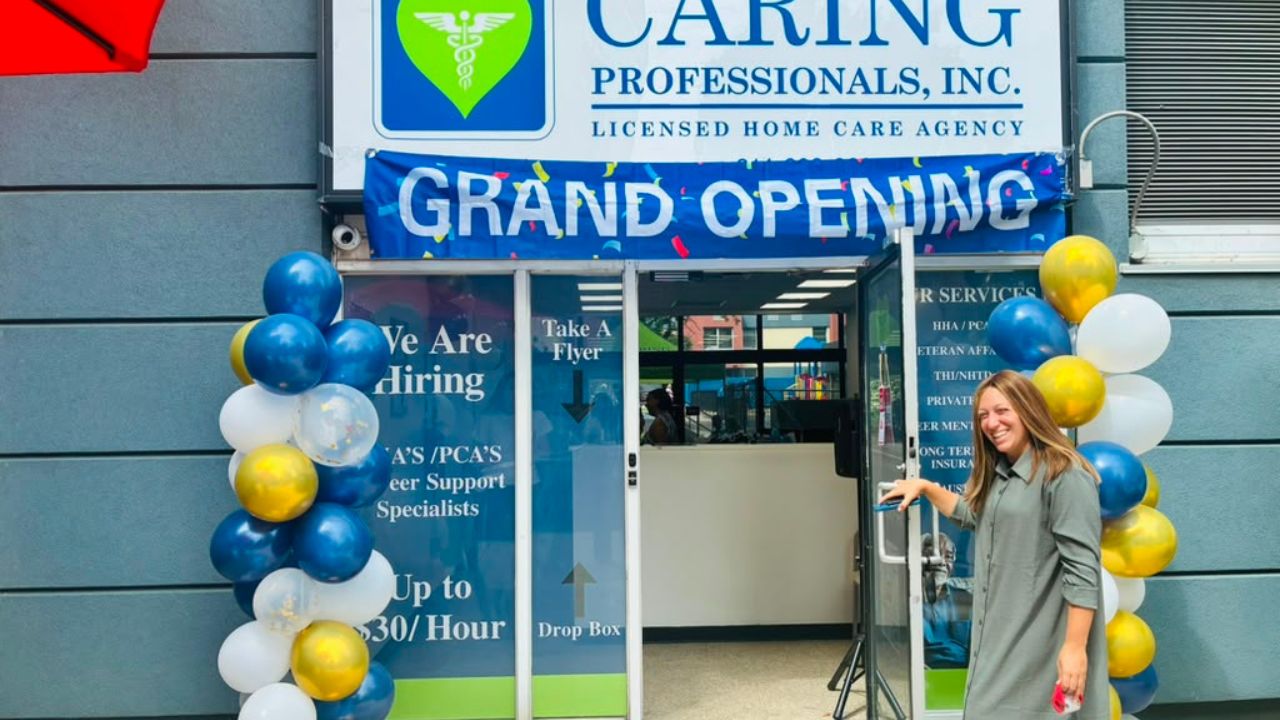
What Bronx families need when they begin looking for home care is not a national franchise with the borough’s name inserted into a template. It is genuine local knowledge: the hospitals, the community resources, the cultural expectations, and the practical realities of the neighborhoods where care is actually delivered. Caring Professionals has served Bronx families from our office on East 149th Street in the South Bronx for years, and our roots in New York home care reach back to 1994.
What Bronx Families Are Actually Looking For
Most families begin the search for home care in the Bronx at a moment of pressure — a hospital discharge arranged faster than expected, a fall, or a gradual decline that has finally crossed a threshold. The search, whether prompted by a discharge planner’s referral or a late-night moment of worry, is rarely unhurried.
What matters most is whether the agency can place the right aide: someone who speaks the client’s language, understands their cultural context, and can build a relationship that makes home care work. In a borough as diverse as the Bronx, that question carries real weight. For a Spanish-speaking senior in Mott Haven, an Albanian-speaking client in Belmont, or a Bengali-speaking family in Parkchester, care delivered without language and cultural alignment is care that struggles from the first day. Language matching in the Bronx is not a preference. It is a clinical and practical necessity.
Caring Professionals maintains a Bronx office at 391 East 149th Street in the South Bronx — in the heart of the borough’s largest Spanish-speaking community, not managed remotely from another part of the city. That local presence means our coordinators know the Bronx’s hospitals, its MLTC plan landscape, and its neighborhoods firsthand.
The Bronx’s Neighborhoods and the Home Care Needs They Carry
The Bronx’s diversity is concentrated in specific communities, each with distinct needs that a home care agency either understands or does not. The following is not a complete geography of the borough — it is a recognition that families we serve in different parts of the Bronx are often navigating genuinely different care environments.
Fordham, Mott Haven, and the South Bronx
The South Bronx — Mott Haven, Melrose, Hunts Point, and the neighborhoods around Fordham — is home to one of the largest and most established Spanish-speaking communities in the United States, with deep Dominican and Puerto Rican roots. For many senior residents, Spanish is the primary and often the only language, and a Spanish-speaking home health aide is essential to safe care. Medication reminders, communication about changes in condition, and the basic daily relationship between aide and client all depend on shared language. Beyond language, these communities often have strong family caregiving traditions and specific cultural expectations about the role a professional aide plays within the household.
Caring Professionals employs Spanish-speaking home health aides and personal care assistants throughout the South Bronx, and our East 149th Street office places our coordinators directly within the community we serve there.
Belmont
Belmont — the Bronx’s historic Little Italy centered on Arthur Avenue — retains a significant Italian-American heritage alongside a substantial and growing Albanian-American community. Albanian language capability in an aide is a meaningful differentiator in this part of the Bronx, where a portion of the older population speaks Albanian as a primary language. Multigenerational households are common in Belmont, and coordinating care often means working alongside adult children and extended family who are closely involved in daily decisions.
Riverdale and Kingsbridge
Riverdale and Kingsbridge, in the northwest Bronx, are home to one of the borough’s most established Jewish communities, including Russian-speaking and Yiddish-speaking seniors. For Holocaust survivors in these neighborhoods, culturally sensitive care is not a nicety but a necessity — aides who understand the specific needs and sensitivities of survivors provide a quality of companionship and care that makes a genuine difference. Caring Professionals offers dedicated services for Holocaust survivors through our Caring Companions program, and we employ Russian-speaking and Yiddish-speaking aides who serve the Riverdale and Kingsbridge communities.
Co-op City
Co-op City, in the northeast Bronx, is one of the largest cooperative housing developments in the world and home to a substantial aging-in-place population. Its residents include large African-American and Caribbean communities, and many seniors who have lived in the development for decades and intend to remain there. The scale and density of Co-op City create specific logistical realities for home care — coordinating consistent, reliable aide coverage across a large residential community requires an agency that understands the neighborhood. Haitian Creole and Spanish are primary languages for significant portions of this population, and our workforce reflects that.
Throggs Neck and Country Club
The southeastern Bronx neighborhoods of Throggs Neck, Country Club, and City Island retain strong Italian-American communities and a preponderance of multigenerational, family-owned homes. Care arrangements here frequently involve coordinating with multiple family members, and families often place a high value on continuity — the same aide, consistently, building a genuine relationship with the senior over time. It is a priority we share and build our placements around.
Parkchester and Pelham Bay
Parkchester and Pelham Bay are among the Bronx’s most diverse established residential communities, with significant Bengali and other South Asian populations alongside longstanding multigenerational families. The range of languages spoken across these neighborhoods — Bengali, Spanish, and others — makes an agency’s multilingual capability particularly important here. Families in these communities also frequently navigate the Medicaid and MLTC system for the first time, and the guidance an experienced LHCSA can provide in understanding entitlements and enrollment is especially valuable.
Bronx Hospitals and What Happens After Discharge
For most Bronx families, the home care conversation begins at a hospital. Understanding which hospitals serve the borough, and what the discharge process involves at each, is practical knowledge that makes the transition from hospital to home considerably smoother.
Montefiore Medical Center is the dominant hospital system in the Bronx, with multiple campuses across the borough and a discharge process that is generally well-coordinated given its scale. Jacobi Medical Center, a public hospital in the Morris Park area, serves the east Bronx and is a major trauma and teaching hospital; discharge coordination at large public hospitals can be more variable, and families benefit from confirming CHHA arrangements proactively before the day of discharge. Lincoln Medical Center in the South Bronx serves Mott Haven and the surrounding neighborhoods and is one of the busiest hospitals in the borough. North Central Bronx Hospital, adjacent to Montefiore’s Norwood campus, serves the north-central Bronx.
At each of these hospitals, the window between a discharge decision and a patient leaving the building can be shorter than families expect. Having a Licensed Home Care Services Agency identified and a care coordinator contacted before the discharge date — not after — is the single most effective thing a Bronx family can do to ensure the first week at home goes smoothly. Our guide to hospital discharge and home care in New York covers the full process in detail.
What to Look For in a Bronx Home Care Agency
The criteria for evaluating a home care agency in the Bronx are the same as anywhere in New York — LHCSA licensure, staff vetting, Medicaid and MLTC plan acceptance, after-hours support — but language and cultural matching carry particular weight in a borough this diverse. An agency that cannot demonstrate genuine multilingual capability across the languages actually spoken in the Bronx’s senior communities is working with a significant limitation in this market.
Local presence matters just as much. An agency with a physical office in the Bronx — staffed by coordinators who know the local hospitals, the MLTC plan landscape, and the community resources — can respond to problems at the speed those problems require. Caring Professionals’ East 149th Street office exists precisely because Bronx home care needs a local infrastructure, not remote management from across the city. Before any other conversation with an agency, confirm that they accept your parent’s specific Managed Long Term Care plan. That single check eliminates the most common source of wasted time in the search.
Medicaid and MLTC Home Care in the Bronx
The Bronx has one of the highest concentrations of Medicaid-eligible seniors in New York State, and Medicaid-funded home care through the Managed Long Term Care program is the funding pathway for the majority of families we work with in the borough. The process — from eligibility determination through MLTC plan enrollment to the New York Independent Assessor nursing assessment that authorizes care hours — is consistent across New York City, but the practical experience of navigating it varies by community.
In neighborhoods where English is not the primary language and where prior experience with the Medicaid system is limited, the enrollment process can be genuinely daunting. Caring Professionals’ coordinators are experienced in helping Bronx families understand their entitlements, what the assessment involves, and what to do if the initial authorization of hours does not reflect the client’s actual needs. For families at the beginning of that process, our detailed guide to how Medicaid home care works in New York is the right place to start. For families whose parent is privately funded or covered by long-term care insurance, our private pay arrangements offer the same standard of matching and service outside the Medicaid framework.
How Caring Professionals Serves Bronx Families
Caring Professionals has been placing home health aides and personal care assistants with Bronx families for years, as part of a New York home care practice that reaches back to 1994. Our office at 391 East 149th Street in the South Bronx is not a satellite of a distant headquarters — it is a local operation embedded in the community it serves.
The languages our Bronx workforce covers reflect the borough’s communities: Spanish, Albanian, Bengali, Russian, Yiddish, Haitian Creole, and more. Every placement is matched by language and cultural background, not by availability alone. The aide who arrives at a Mott Haven apartment on the first morning of care speaks Spanish because we have made a deliberate decision that that is the only acceptable standard for that client. The same principle applies in Belmont, in Riverdale, in Co-op City.
We accept Medicaid, Managed Long Term Care, long-term care insurance, and private pay, and we work with the full range of MLTC plans operating in the Bronx. Our coordinators are familiar with the discharge processes at Montefiore, Jacobi, Lincoln, and North Central Bronx, and we are positioned to move quickly when a family’s timeline is compressed by a discharge that arrives sooner than expected. We also provide dedicated services for Holocaust survivors and veterans across the borough.
Getting Started with Home Care in the Bronx
If you are at the beginning of this process — whether you are managing a hospital discharge, responding to a change in your parent’s condition, or preparing for a conversation you know is coming — we are here to help. Bronx home care is what we know, and we would rather you have that conversation with us before a crisis than in the middle of one.
For families working through Medicaid or MLTC for the first time, our guide to how Medicaid home care works in New York is the right place to start. When you are ready to speak with someone directly, you can reach Caring Professionals at (718) 333 1400 or through our contact page at caringprofessionals.com/contact-us/. Our Bronx coordinators are available to discuss your family’s specific situation, confirm insurance acceptance, and begin the matching process.